
Beyond the Atmosphere: NASA Astronaut Jeanette Epps on Human Connection in the World’s Most Extreme Environments

What does it take to live and work in a place where mistakes are not an option? For Dr. Jeanette Epps, a NASA astronaut, aerospace engineer, and former CIA technical intelligence officer, the answer goes far beyond technical expertise. After spending 235 days aboard the International Space Station (ISS), Epps emphasizes that survival and success in extreme environments depend fundamentally on human connection, trust, and teamwork.

Epps’ journey to space began far from orbit, on Kennedy Street in Syracuse, New York. Her path, however, required preparation in some of the most challenging conditions on Earth. As part of her NASA training, she lived underwater for nine days during the NEEMO mission, submerged nearly 50 feet below the surface at more than twice normal atmospheric pressure. She also spent five days navigating the demanding cave systems of Slovenia, experiences designed to simulate isolation, confinement, and uncertainty.
According to Epps, these environments reveal more than technical capability. They expose how individuals respond under pressure and how teams function when every decision matters. “You learn a lot about yourself in these trials,” she explained. “How do you help your crewmate? How do you stay calm and safe? You’re building muscle memory for the emergency of the day.”
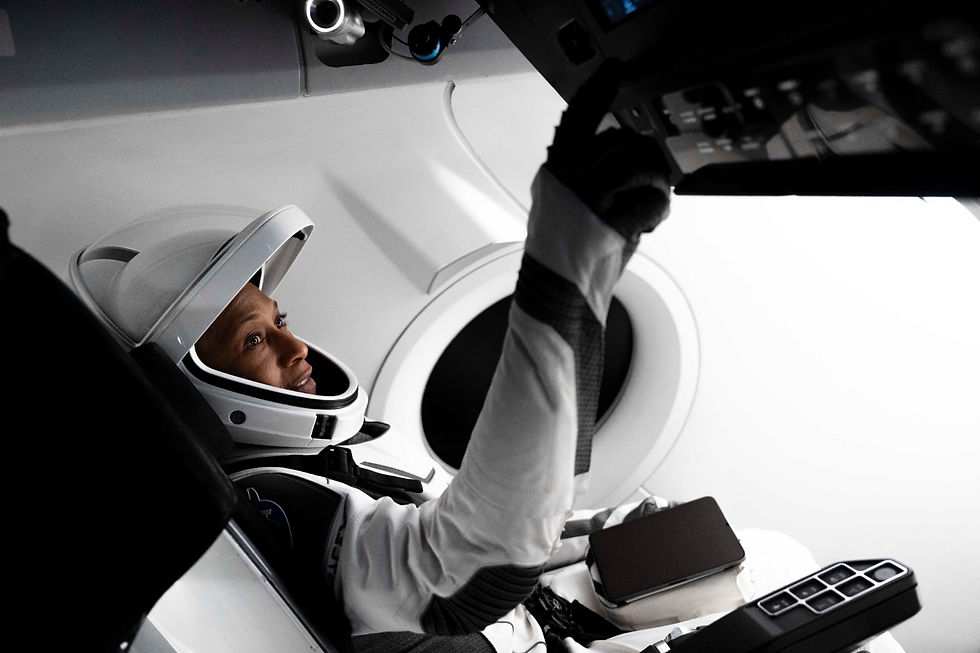
Transitioning to life in orbit brought its own challenges. Epps describes the sensation of weightlessness as similar to scuba diving, but notes that the physical adaptation is only part of the experience. The more profound shift comes from perspective. From the windows of the ISS, Earth appears without borders, an experience astronauts often describe as the “overview effect.” For Epps, that view carried a powerful message. Seeing the planet as a single, fragile system led her to reflect on humanity’s shared responsibility. “Every time I looked out the window, I thought we are not taking care of each other,” she recalled. “We really need to be good to our fellow humankind.”

As space exploration enters a new phase, with NASA’s Artemis program and the rapid expansion of commercial spaceflight, Epps sees the Moon as a critical testing ground for future missions to Mars. Yet she stresses that technology alone will not determine success. Whether in space, science, or business, she believes the same principle applies: no mission is accomplished alone.

Today, Jeanette Epps shares these insights beyond the space program through keynote speeches and interactive workshops. Drawing from her experiences in orbit and extreme environments on Earth, she translates high-stakes lessons into practical strategies for leadership, resilience, and collective performance. Her message is clear and consistent. Progress, whether beyond the atmosphere or here on Earth, is driven by curiosity, cooperation, and the strength of human connection.



Comments